
Co-founders Michelle Erenberg and Ellie Schilling started Lift Louisiana on February 1, 2016 to lead sustained legislative advocacy and legal efforts against the anti-abortion push advancing policies in our state unchallenged. While the nationwide reversal of abortion protections created by Dobbs v. Jackson was six years away, Louisianans were already facing damaging blows to their reproductive freedoms. By 2013, Louisiana had dozens of restrictions on the books and TRAP laws, Targeted Regulation of Abortion Providers, were building steam. These restrictions created barriers to abortion care like waiting periods, biased counseling, unnecessary medical requirements for providers, and confusing changes to clinic regulations; whittling away access in our state despite Roe v. Wade.
Prior to founding Lift, Schilling witnessed the chaotic impact of these new regulations as a lawyer representing a local abortion clinic. Erenberg was involved with intersecting community issues through work with nonprofits, and joined in Louisiana reproductive rights organizing through her capacity as a board member for the National Council of Jewish Women. The pair initially met through a newly forming coalition of advocates including local leaders like Louisiana Abortion Fund Founder Amy Irvin and Melissa Flournoy, then of Planned Parenthood, to fight back against a round of new clinic regulations being ushered in with little notice or public process.
The new coalition was successful in generating 10,000 public comments and inspiring enough outrage that the Department of Health was forced to hold a public hearing. Erenberg says the impact was a clear sign of what was possible.
“If people all came together and worked on this and had a strategy, then we could see some movement.”
“It was common knowledge in the Reproductive Rights space that the anti-choice movement essentially test drove its most detrimental initiatives in the South. Therefore, if there was any chance of limiting the impact of these dangerous policies and their potential reach on the national level, it had to happen in the state legislatures.”
While this coalition formalized into LCRF–the Louisiana Coalition for Reproductive Freedom, and continued vital pro-abortion activism, Ellie and Michelle became focused on the lack of strategic opposition at the Capitol and the need for litigation. They could see we needed reproductive rights advocates to testify against bills, to create a legislative record of opposition, and to make it visible to lawmakers that there was an even stronger counter movement. Without this, harmful bills were passing with ease and were difficult to fight in court.
Over many glasses of wine and cigarettes, as well as a multitude of conversations with other local organizations, advocates, and community leaders, Michelle and Ellie combined their expertise and their vision to imagine a Louisiana-based organization fighting for reproductive freedom by filing lawsuits and fighting policy.
The value of filling this gap was seen by funders too. With an initial grant from the Packard Foundation, Lift Louisiana formed to build legislative and litigation strategy and encourage civic engagement in our state for repro issues. Lift committment to collaboration allowed us to move in lock step with the direct service and community activism guiding the local reproductive rights movement.
“I think it’s meaningful to have that kind of secured funding for an early org. What that meant is that Lift was able to have a consistency that is just not true of many orgs across subject areas, and it’s especially not true of a reproductive rights organization in Louisiana.”
In the first year, Lift Louisiana began establishing relationships with state legislators, building a network across national orgs, and strengthened their participation in local coalitions to establish open lines of communication and align on strategy, share resources, and connect the fights.
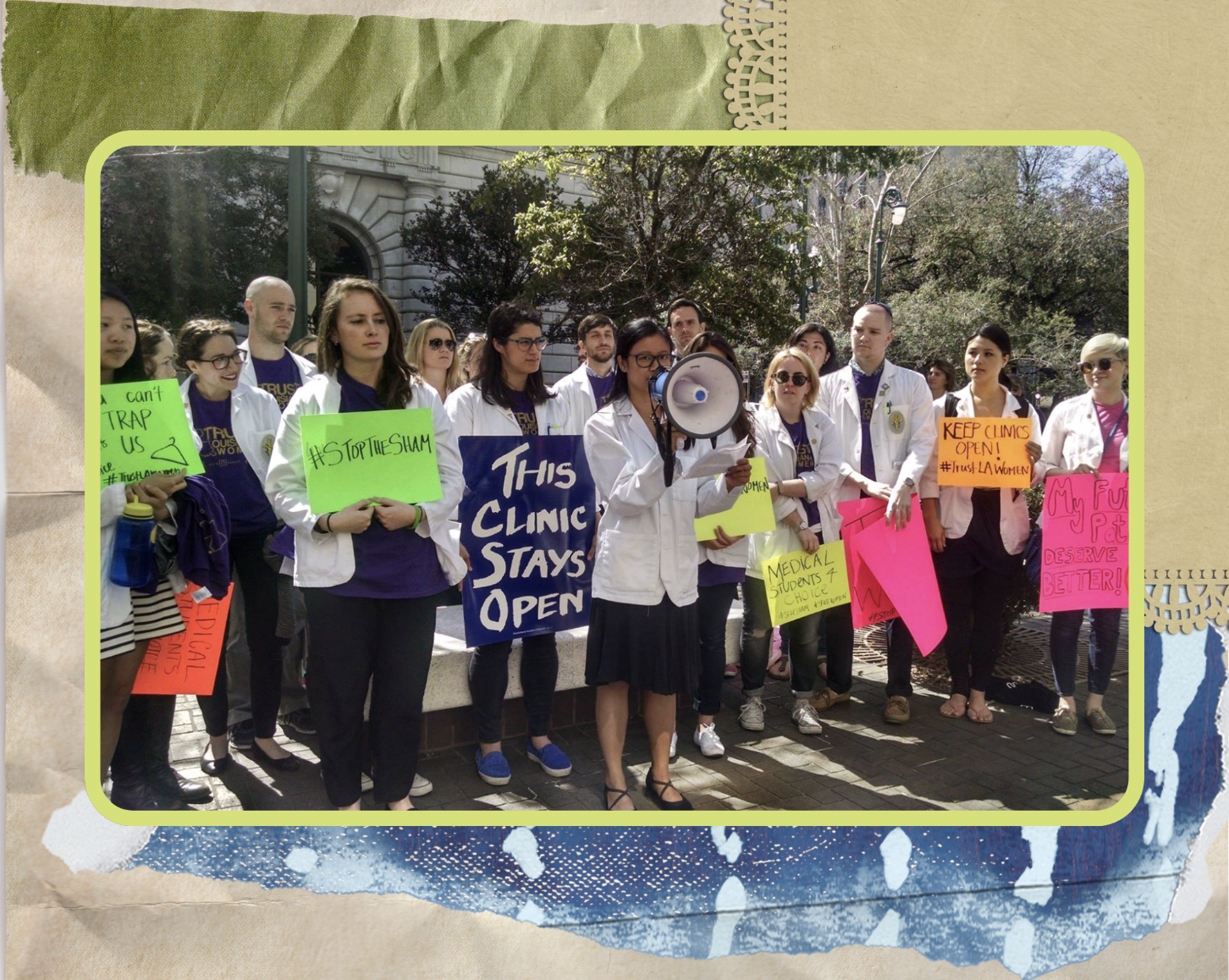
In March 2016, Lift Louisiana joined with the Louisiana Coalition for Reproductive Freedom to organize a rally outside the federal courthouse in New Orleans when the Supreme Court heard oral arguments in Whole Woman's Health v. Hellerstedt, a challenge to Texas TRAP laws. In June 2016, the Court ruled 5–3 to strike down those Texas laws as unconstitutional.
This was the start of a new era: a decade of work holding the line at the Capitol and through litigation, ensuring that state legislators and anti-abortion extremists would be held accountable, and would never win without facing opposition again.