
In 2020, Louisiana already had 89 abortion restrictions on the books, yet legislators decided to add another—one that would have effectively closed all but a single abortion clinic in the state. The new law required physicians providing abortion services to obtain admitting privileges at a hospital within 30 miles of where the procedure would be performed. In practice, however, these privileges were exceedingly difficult for abortion providers to secure. Hospitals often require physicians to admit a minimum number of patients each year to maintain privileges, but abortion is a highly safe procedure, and complications requiring hospitalization are rare. As a result, providers were unable to meet these thresholds. While framed as a measure to protect patient safety, the law instead cast abortion care as inherently risky, despite overwhelming evidence to the contrary.
This legislation closely mirrored a Texas law that the Supreme Court had already struck down in Whole Woman’s Health v. Hellerstedt (2016). That decision marked a major victory for the reproductive rights movement, establishing that abortion regulations must not impose an “undue burden” on patients and must provide legitimate medical benefits. In other words, states could not justify restrictions without evidence that they protect patients' health. Despite this precedent, Louisiana moved forward with an almost-identical law.
A clinic in Shreveport challenged the statute, ultimately bringing the case before the Supreme Court as June Medical Services v. Russo. In the months leading up to oral arguments, Lift Louisiana helped lead a partnership with the Center for Reproductive Rights to raise awareness about the law’s potential impact.
“Lift Louisiana was just such an organic partner... the organization is really creative in the ways they engage with members of the community to educate them about what is happening.”
Recognizing that abortion access was not at the forefront of public attention, the partners turned to creative strategies to mobilize the community and bring new voices into the fight.
For example, Lift’s Executive Director Michelle Erenberg and activist Louisa Carman helped form a sub-krewe in the Krewe of Chewbacchus parade with the theme “Repro Wars: The Empowered Strike Back.” During the parade, members distributed informational materials and QR codes linking to ways people could get involved, meeting communities where they were and transforming celebration into action.
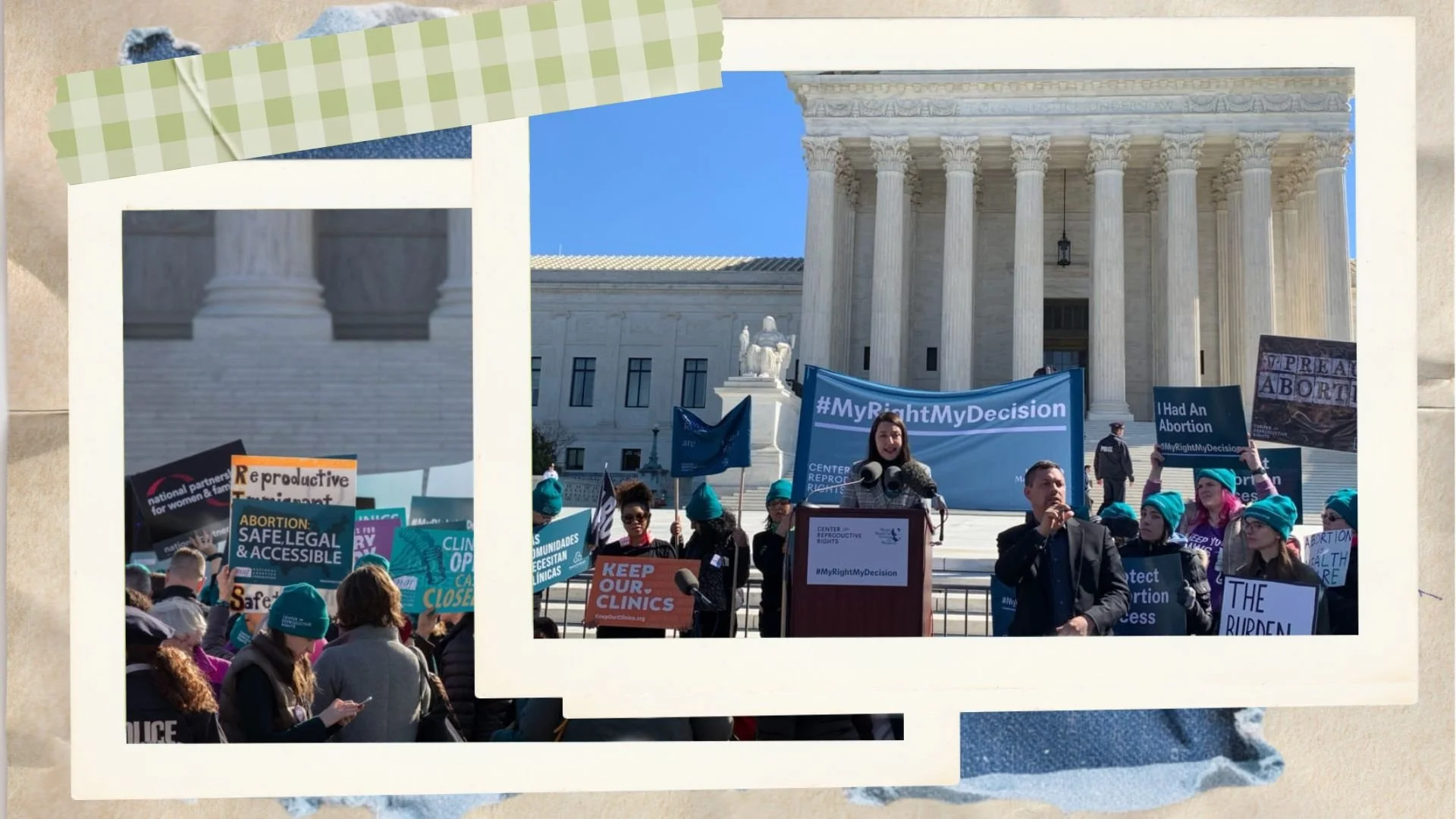
Our organizing efforts culminated on March 4, 2020, when hundreds of advocates gathered in both Washington, D.C. and New Orleans as the Supreme Court heard oral arguments. Physicians, providers, and activists from across the South, including Michelle Erenberg, spoke out in defense of abortion access, demonstrating the collective strength behind the case.
On June 29, 2020, the Supreme Court ruled Louisiana’s admitting privileges law unconstitutional in a narrow 5–4 decision. The outcome preserved abortion access in the state, a hard-fought victory made possible by years of organizing, advocacy, and partnership-building. At the same time, the slim margin signaled a shifting judicial landscape, underscoring how aggressively anti-abortion lawmakers were testing the limits of what courts would allow. The case made clear both how much was at stake and how essential it would be to keep building power in the years ahead.