
When the fall of Roe triggered Louisiana’s abortion bans in 2022, we were one of three states where abortion immediately became illegal. The newly instated laws made no exceptions for rape or incest, and only allowed abortion if the pregnant person’s life was at risk, or in cases of ectopic and medically futile pregnancies. Even under those circumstances, physicians became hesitant to administer an abortion, fearing criminal punishment. With the extreme nature of these bans, a major question materialized for Lift: Did these laws match public opinion?
In 2023, we worked with JMC Analytics to run a poll investigating Louisianan’s perspectives on abortion laws. This poll had surprising results; the majority of voters supported amendments to Louisiana’s Constitution for abortion rights. The nuanced questions asked in the poll showed that many voters saw abortion as a personal issue and not a political one. While over half of voters identified as pro-choice, an even higher percentage (70%) would support exceptions to the ban based on a doctor’s judgment and (73%) for pregnancy in cases of sexual assault. This showed us that people’s opinions on specific issues may stray from their voting patterns, and that sentiment towards abortion access in Louisiana may be different than past polling had shown. These results highlighted the need for further conversations about abortion in our communities.
We were aware of a strategy called deep canvassing that organizers were using to have important conversations with voters, and we began collaborating with Aly Curro, then at Louisiana Department of Health, to investigate how it could work in our state to change the narrative on abortion access.
Deep canvassing is a form of structured, conversational activism focused on facilitating conversations and shifting mindsets with storytelling and empathy. While standard political canvassing attempts to evaluate where public opinion stands, the deep canvassing method aims to understand the reasoning behind voters' opinions. The first use of deep canvassing in the US was in California in 2012, where the Los Angeles LGBT Center used this method to understand and shift opposition to same sex marriage. Following this success, the strategy has been adapted for other issues, and there is increasing evidence that deep canvassing works.
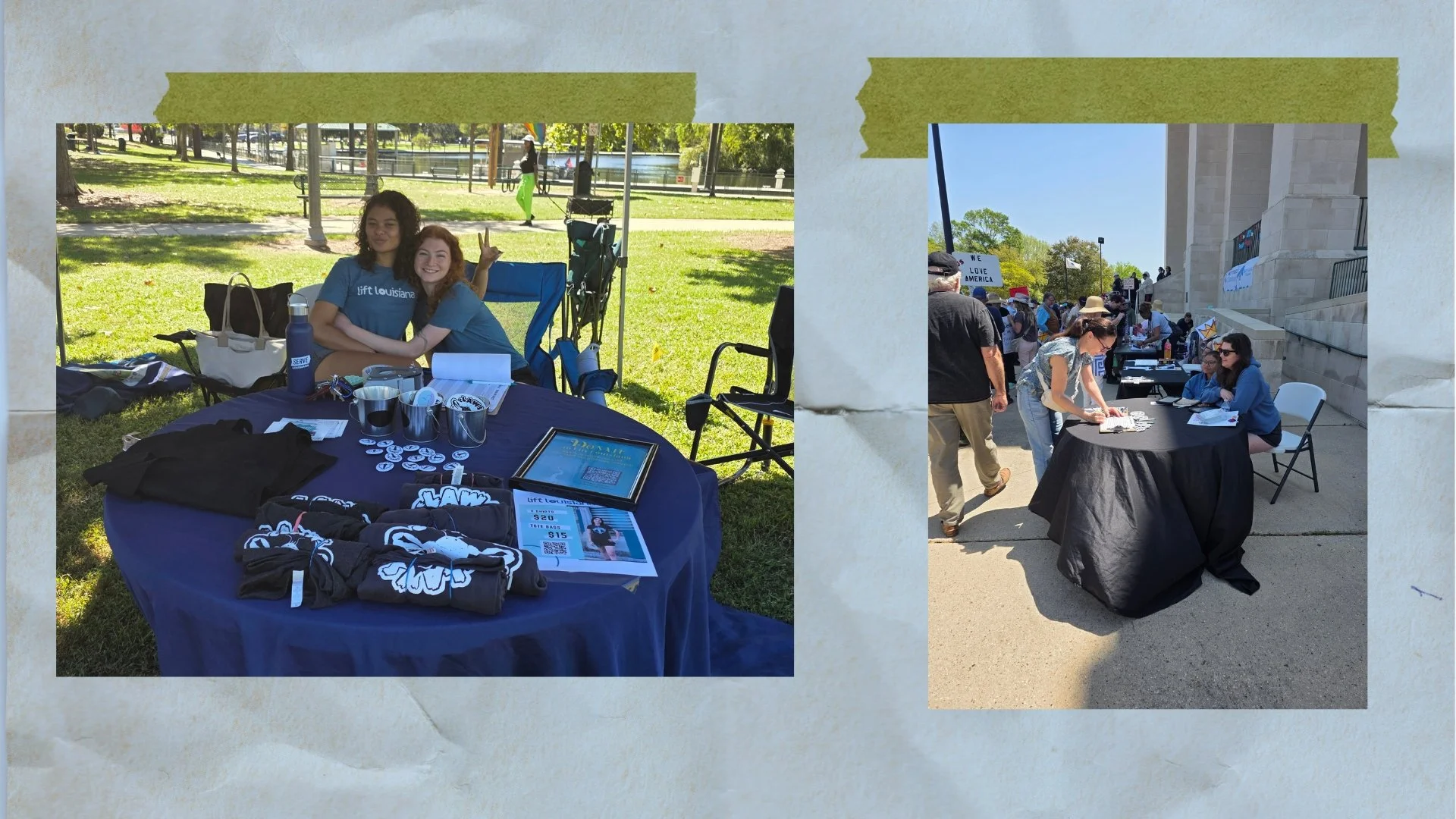
To develop the program, we reached out to other deep canvassing projects including Planned Parenthood in Maine and AVOW in Texas. Curro said, “We didn't want to reinvent the wheel, so we went looking for people who'd already built one. And what we found, over and over, was generosity. Maine and Avow both opened their playbooks to us: their scripts, their training programs, every slide and material they had, and how they analyze conversations and target voters.” From their learnings, we gained a head start in understanding what worked, and what didn’t. Despite the foundation we built from, it took many iterations to adapt the project to our communities and to finetune our script and storytelling strategies to be effective.
“Taking on something new and resource-intensive in this environment took courage, and it says a lot about Lift and the whole team that they raised their hand to do it.”
Lift Louisiana’s Deep Canvassing program launched in Slidell, Louisiana in October of 2024. We chose Slidell in response to poll results that showed significant support there for lifting abortion bans despite its conservative-leaning status. We hired a field organizer from the community who was passionate about the mission, and built a canvassing team to launch the pilot.
During this initial phase of canvassing, our conversations indicated that people in Slidell were more supportive of abortion access than shown in the typical voting polls. They were, for the most part, eager to open their doors and discuss abortion, and although some may have been reluctant to admit that the stories and facts shared by canvassers had changed their perspectives, these conversations planted a seed.
Since then, the program has grown to a network of both paid and volunteer canvassers from our community and local universities. In 2025, we expanded canvassing to Jefferson Parish and launched a phone banking component. Hundreds of meaningful conversations have taken place, allowing our team to learn people’s individual stories and the reasons behind their feelings on abortion. These connections provide a window for us to share what abortion access really means, and how it impacts us all. These conversations take us behind the stigmas and transcend the limitations of messaging through social media and traditional media campaigns.
“The impact isn’t only on voters. It’s also on those of us knocking on doors. People become more confident sharing their own stories, more open to different views, and more willing to engage productively without needing to agree. That is part of how stigma shrinks, one canvasser and one conversation at a time.”
These face-to-face conversations foster understanding and have continuously proven to shift individual’s mindsets. Lift has been able to use stories from the doors to help shape our policy goals and to better identify the barriers and opportunities to reproductive rights amongst voters. Having knowledge of the stigmas people carry, and the complexity of their opinions has provided Lift with great context to shape how we continue to advocate for reproductive justice.
This work was made possible in part by funding from the Urgent Action Fund for Women's Human Rights, the Tides Stronger Together Fund, and the Collaborative for Gender + Reproductive Equity, a donor-advised fund of Rockefeller Philanthropy Advisors.