
Two years following the trigger bans forbidding abortion care in Louisiana, the negative impacts on doctor decision-making, patient care, and maternal health were growing. Physicians and hospitals that performed life saving procedures for pregnant people feared facing prosecution and jail time. While “pro-life” politicians and reproductive health bans treat abortion as an isolated medical procedure, patients and providers know it's not that simple. Under the trigger bans, what constitutes serious or imminent danger is not clearly defined, leaving providers uncertain about when intervention is legally permitted. Medical providers are forced to weigh the consequences of facing a criminal charge or helping a pregnant person with a dangerous medical complication.
At a national level, The Center for Reproductive Rights was concerned about how healthcare restrictions were impacting people in states like Louisiana, and they reached out to us to partner on a fact-finding initiative. With their expertise in human rights research, and our local knowledge and relationships, along with Physicians for Human Rights and Repro Healthcare, each organization utilized their unique perspective and specialization for the research. Lift acted as a liaison, bridging the gap between medical providers and the statewide community, determining the important questions, and sharing the answers with the public. Together, our goal was to prove the unfortunate consequences we knew were occurring, and make them clear to lawmakers and the public.
““[The Center for Reproductive Rights] knew that if we did this project together, it was going to arm Lift Louisiana with more information and data that they could use to continue to advocate at the state capitol and to advocate for better laws, and for better conditions for people in Louisiana.”
Research began in May of 2023 with in-depth interviews of healthcare providers and patients on their experiences, issues, and fears about the problem of abortion access and prenatal care in the state of Louisiana. Afterward, we anonymized these findings and conversations in order to protect the patients and providers that participated from the risks they faced for speaking out. The collaborative approach between our organizations allowed for the research to cover multiple specialties: bringing together medical expertise, qualitative research, a community-based approach, and legal analysis.
The final Criminalized Care Report was published in March of 2024, including individual stories and experiences and addressing the major violations of federal and international health laws, such as EMTALA we uncovered. The Emergency Medical Treatment and Labor Act, EMTALA, is a federal law that mandates hospitals provide life saving healthcare services, regardless of an individual's ability to pay. Through our research, we found examples of Louisiana’s abortion laws violating EMTALA, such as in the case of a sick patient with a heart condition who needed an abortion. The physician interviewed for the report said they were told they had to, “‘maximize all medical management options before we could offer any sort of termination procedure.’ And I’m thinking, but what if she doesn’t want to wait that long because she could have a heart attack and die? I don’t know. At what point can you act?’”
Additionally, the research found that physicians and medical centers were pushing vital prenatal care back into the second trimester of pregnancies in an effort to avoid a situation in which they might need to administer an abortion, with miscarriages most common during the first trimester. This is dangerous for both pregnant persons and the fetuses that they carry, as the lack of early care and intervention could cause pregnancy complications. Low-income and marginalized groups are disproportionately impacted by these restrictions, as they often cannot afford to travel out of state to seek necessary care.
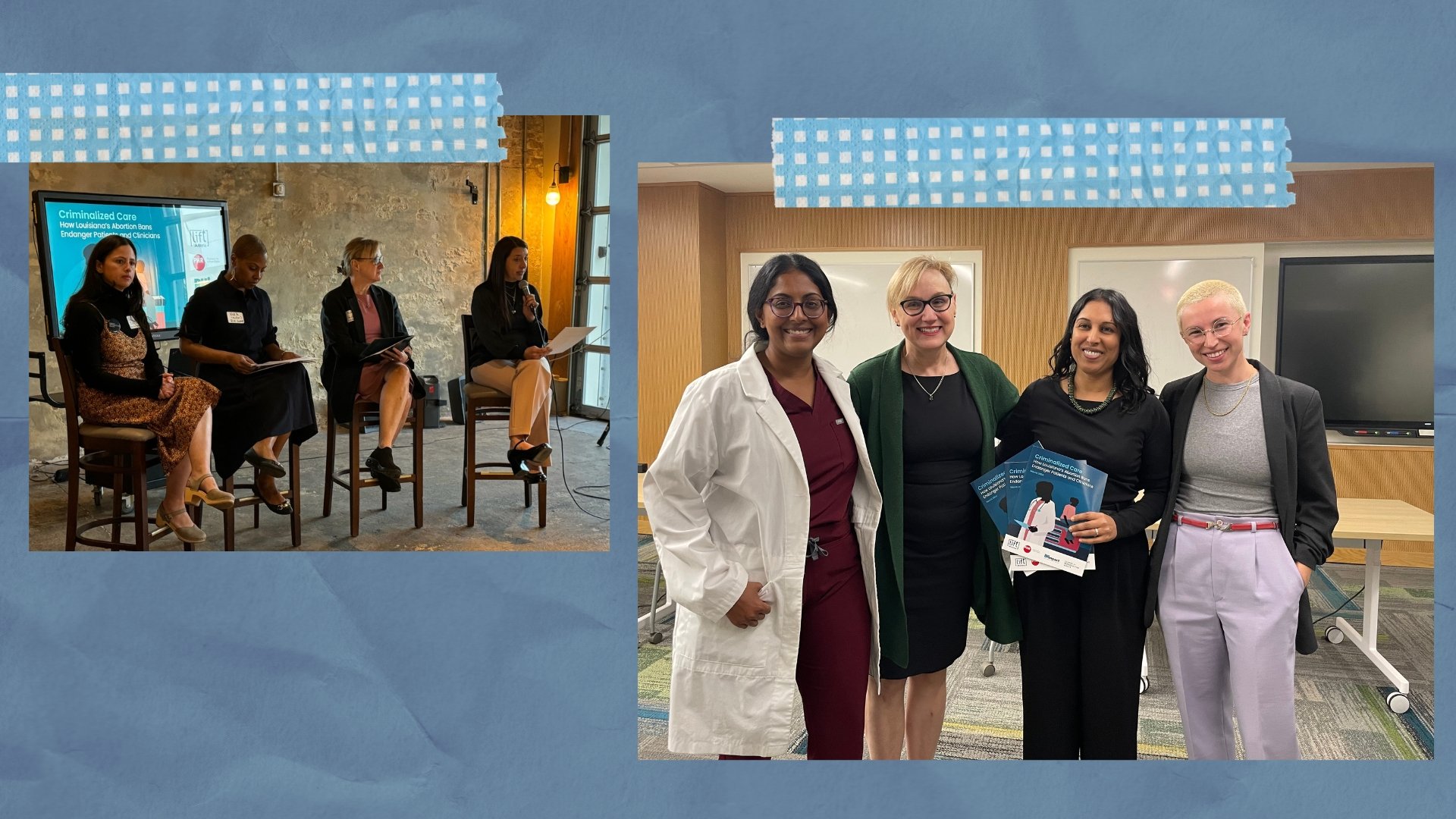
Lift and the other organizations involved intended to use the Criminalized Care Report as a springboard to spur policy action and amend harmful abortion laws. On a local level, we held a community launch event to discuss the results and raise awareness among Louisianans. On a national level, we presented the findings in a briefing with Democratic US House legislators, explaining the harm and why it was necessary to pursue policy changes, especially in miscarriage management. This briefing put the information on record and in the room. The Center for Reproductive Rights brought it to an international scale, presenting the findings in a discussion of the Dobbs ruling at the Regional Commission on Human Rights.
Press following the briefing and the launch event was widespread, and helped put the report and the concerns highlighted into the public light. A quote from NPR states that the report was, “among the most comprehensive research to date showing abortion bans are changing pregnancy care and worsening maternal health. It concludes that Louisiana's ban is impeding a federal law that regulates the provision of emergency health care, and is infringing on reproductive and human rights.” It was also featured in multiple MSNBC news broadcasts, helping spread awareness to a diverse audience.
“Sexuality and reproduction are so stigmatized anyway in our in our culture.
And then when you add layers of punishment, when you add criminalization, when you add civil penalties, for people who seek care or provide care, it really contributes to this stigmatization of sexuality and reproduction.”
Karla Torres, Senior Rights Counsel at the Center for Reproductive Rights, who co-led their involvement in the report, explains that “framed through an international human rights lens, a human rights fact-finding report like the Criminalized Care Report can really help to do advocacy not just in the international and regional spaces, but also in local, state, and national spaces as well, including the Louisiana legislature.” And the outcomes of the report show that impact. Ultimately, the collaborative effort between Lift Louisiana, the Center for Reproductive Rights, Physicians for Human Rights, and Repro Healthcare created a powerful report that raised awareness and placed the negative consequences of regressive abortion care policies in front of local and far-reaching legislators and citizens. The irrefutable evidence bound in the Criminalized Care Report informs advocates and legislators to this day, as we work to right these wrongs.
Since then, the program has grown to a network of both paid and volunteer canvassers from our community and local universities. In 2025, we expanded canvassing to Jefferson Parish and launched a phone banking component. Hundreds of meaningful conversations have taken place, allowing our team to learn people’s individual stories and the reasons behind their feelings on abortion. These connections provide a window for us to share what abortion access really means, and how it impacts us all. These conversations take us behind the stigmas and transcend the limitations of messaging through social media and traditional media campaigns.
This work was made possible in part by funding from the Urgent Action Fund for Women's Human Rights, the Tides Stronger Together Fund, and the Collaborative for Gender + Reproductive Equity, a donor-advised fund of Rockefeller Philanthropy Advisors.